
 What are high-power laser optics?
High-power laser optics are precision-engineered optical components designed to operate reliably under extreme laser conditions where conventional optics fail. As explored in our whitepaper “Defining High Power in Laser Optics”, what qualifies as high power depends entirely on the application, the pulse regime, and the specific damage mechanisms involved. In modern photonics, “high-power” is determined by the interplay of Laser-Induced Damage Threshold (LIDT), absorption, electric field distribution inside the coating stack, pulse duration, repetition rate, and beam diameter.
High-power laser optics are the heart of modern technological advancement. They enable industrial material processing units that weld our vehicles, the directed energy systems that protect our borders, and the petawatt-class laboratories where the secrets of nuclear fusion are being unlocked. At these levels, the difference between success and a ruined system is measured in parts-per-million (ppm) of absorption and the density of a thin-film coating.
At OPTOMAN, our approach to defining high power in laser optics is centered on LIDT, as it directly reflects the interaction between laser parameters, coating absorption, defect density, and long-term reliability. The ISO standard defines LIDT as “the highest quantity of laser radiation incident upon the optical component for which the extrapolated probability of damage is zero”.
LIDT is typically expressed in terms of energy density, power density, or linear power density; it marks the operating point beyond which optical properties such as reflectance or transmittance begin to degrade. When systems operate too close to this threshold, optical properties like reflectance degrade, leading to failure. By analyzing these failure points, we have established approximate operational boundaries in the fs–ps pulse regime, where Ion Beam Sputtering (IBS) becomes a technological necessity.
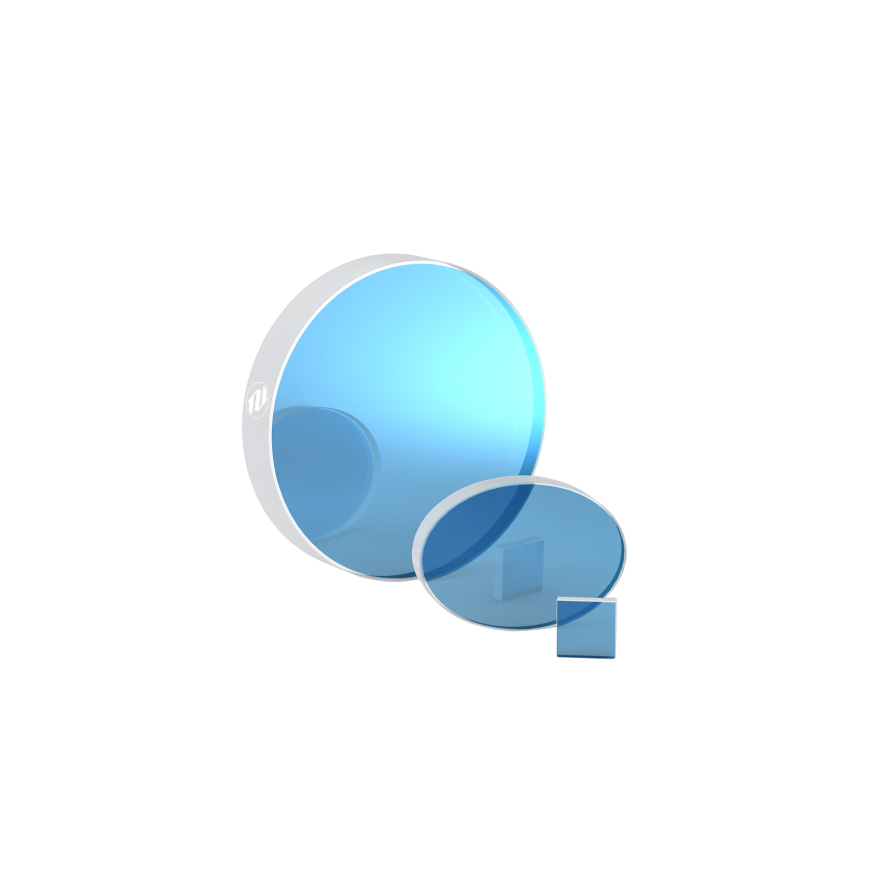
Forget about low-power e-beam mirrors with high absorption and scattering losses. We offer cost-effective Ion Beam Sputtered (IBS) coated dielectric mirrors that rival e-beam optics in price but outperform them in every critical parameter.
OPTOMAN’s IBS coatings ensure high reflectivity, low absorption, and exceptional environmental stability, resulting in free of scattering optics that are built to handle the highest laser powers without degradation.
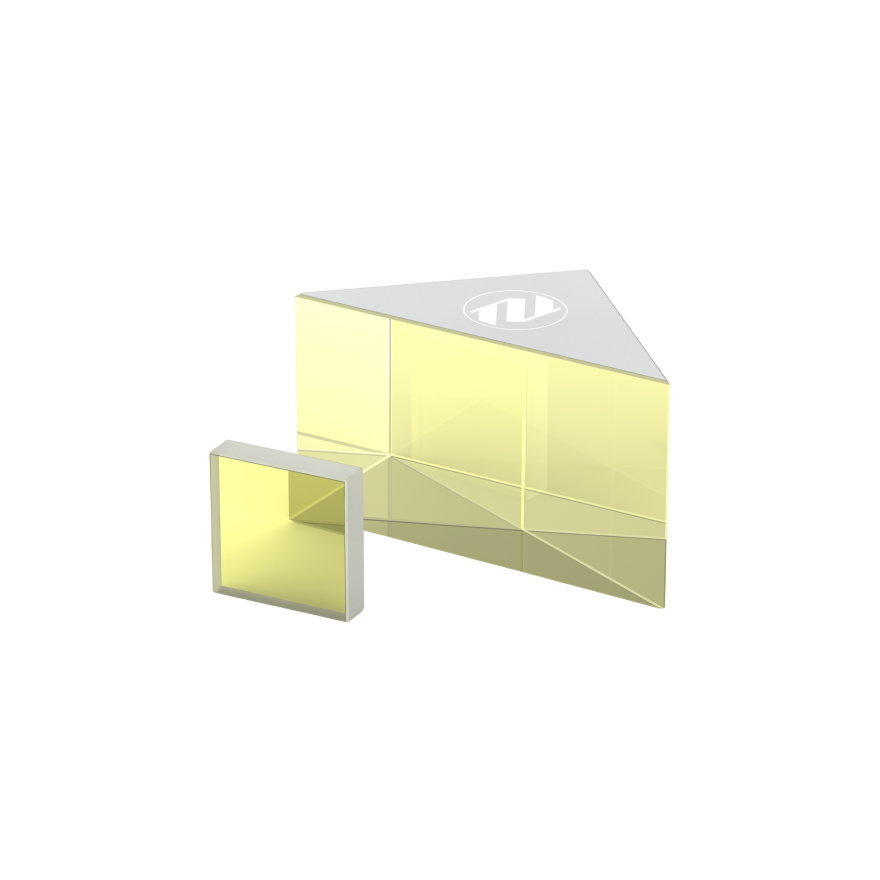
From Dichroic Mirrors that sharply separate different harmonics
or other specific wavelengths without absorption or spectral drift, to Non-Polarizing Beam Splitters that split beams without altering polarization of the light, to Partial Reflectors that precisely balance reflectance and transmittance – each filter type serves a vital role in beam control and laser efficiency.
All filters feature dense, stable IBS coatings for maximum optical performance and minimal losses, with anti-reflective coatings on secondary surfaces where needed.
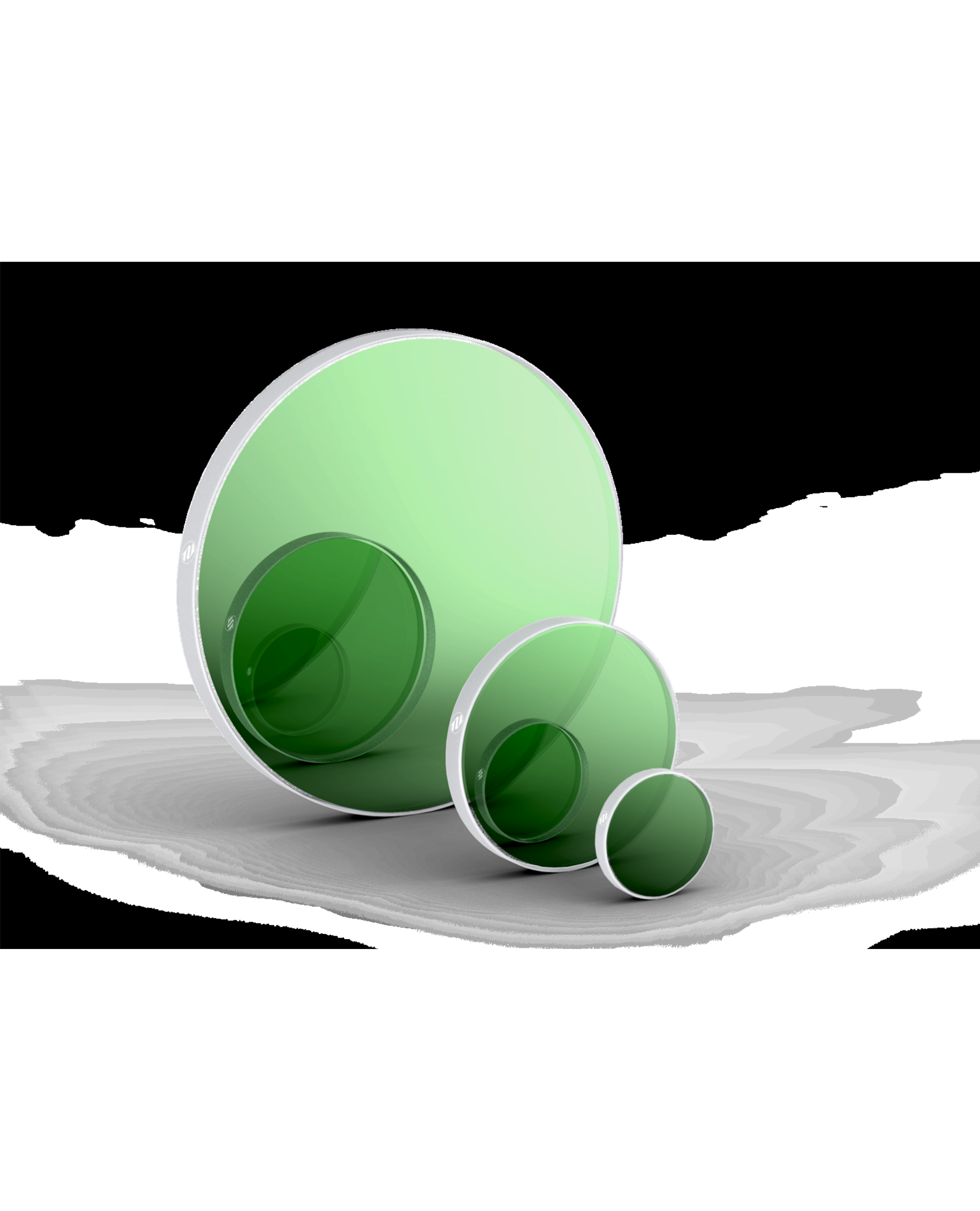
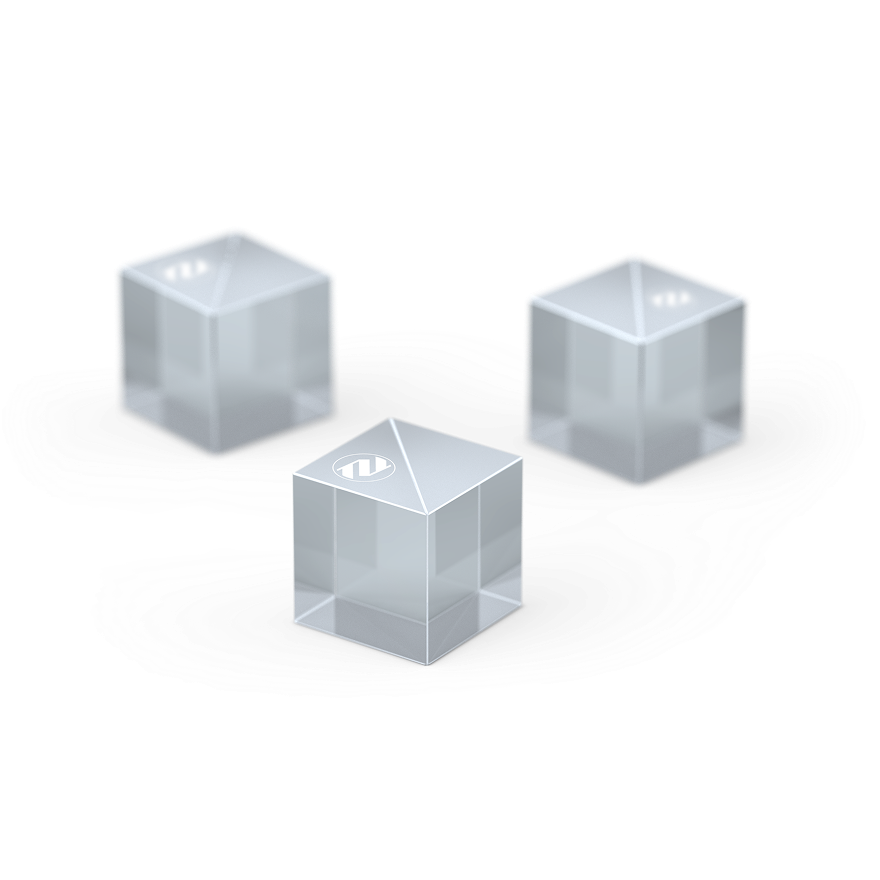
Explore High Power Thin-Film Polarizers that efficiently separate s- and p- polarized light with high extinction ratios and minimal absorption, Zero-Order Air-Spaced Waveplates that ensure precise polarization control with excellent stability over temperature and wavelength, and Polarizing Cube Beamsplitters that offer robust, alignment-friendly integration for splitting or combining laser beams.
Every component features an exceptional Laser-Induced Damage Threshold (LIDT) and consistent optical performance over time.
What are high-power laser optics?
High-power laser optics are precision-engineered optical components designed to operate reliably under extreme laser conditions where conventional optics fail. As explored in our whitepaper “Defining High Power in Laser Optics”, what qualifies as high power depends entirely on the application, the pulse regime, and the specific damage mechanisms involved. In modern photonics, “high-power” is determined by the interplay of Laser-Induced Damage Threshold (LIDT), absorption, electric field distribution inside the coating stack, pulse duration, repetition rate, and beam diameter.
High-power laser optics are the heart of modern technological advancement. They enable industrial material processing units that weld our vehicles, the directed energy systems that protect our borders, and the petawatt-class laboratories where the secrets of nuclear fusion are being unlocked. At these levels, the difference between success and a ruined system is measured in parts-per-million (ppm) of absorption and the density of a thin-film coating.
At OPTOMAN, our approach to defining high power in laser optics is centered on LIDT, as it directly reflects the interaction between laser parameters, coating absorption, defect density, and long-term reliability. The ISO standard defines LIDT as “the highest quantity of laser radiation incident upon the optical component for which the extrapolated probability of damage is zero”.
LIDT is typically expressed in terms of energy density, power density, or linear power density; it marks the operating point beyond which optical properties such as reflectance or transmittance begin to degrade. When systems operate too close to this threshold, optical properties like reflectance degrade, leading to failure. By analyzing these failure points, we have established approximate operational boundaries in the fs–ps pulse regime, where Ion Beam Sputtering (IBS) becomes a technological necessity.
Forget about low-power e-beam mirrors with high absorption and scattering losses. We offer cost-effective Ion Beam Sputtered (IBS) coated dielectric mirrors that rival e-beam optics in price but outperform them in every critical parameter.
OPTOMAN’s IBS coatings ensure high reflectivity, low absorption, and exceptional environmental stability, resulting in free of scattering optics that are built to handle the highest laser powers without degradation.
From Dichroic Mirrors that sharply separate different harmonics
or other specific wavelengths without absorption or spectral drift, to Non-Polarizing Beam Splitters that split beams without altering polarization of the light, to Partial Reflectors that precisely balance reflectance and transmittance – each filter type serves a vital role in beam control and laser efficiency.
All filters feature dense, stable IBS coatings for maximum optical performance and minimal losses, with anti-reflective coatings on secondary surfaces where needed.
Explore High Power Thin-Film Polarizers that efficiently separate s- and p- polarized light with high extinction ratios and minimal absorption, Zero-Order Air-Spaced Waveplates that ensure precise polarization control with excellent stability over temperature and wavelength, and Polarizing Cube Beamsplitters that offer robust, alignment-friendly integration for splitting or combining laser beams.
Every component features an exceptional Laser-Induced Damage Threshold (LIDT) and consistent optical performance over time.
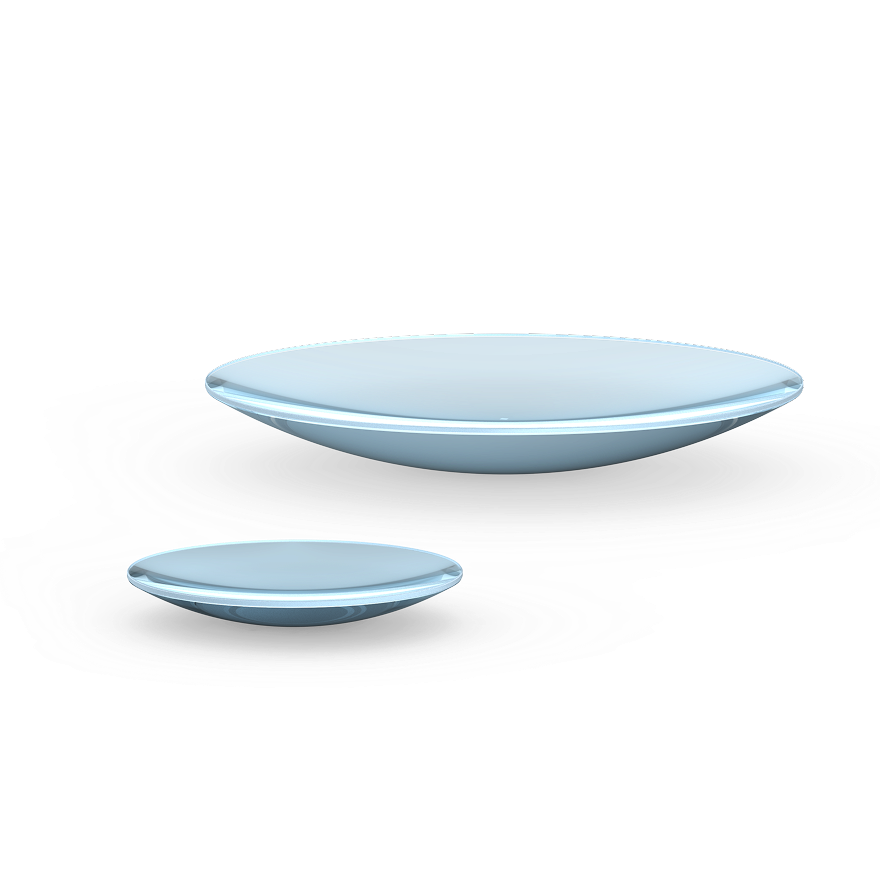
Our AR-coated lenses and windows are coated using Ion Beam Sputtering (IBS) – the most advanced thin-film deposition technology.
Thanks to the near-bulk density of IBS coatings, these optics feature extremely low absorption, excellent environmental stability, and outstanding laser-induced damage thresholds (LIDT). The dense coating structure ensures thermal lensing elimination, resistance to humidity, and mechanical stress, making them suitable for demanding industrial and scientific environments.
Our optical assemblies combine multiple coated components into pre‑aligned modules designed to handle today’s high‑power and ultrafast laser systems. The company’s use of ion‑beam sputtering (IBS) gives these assemblies exceptionally low absorption (sub‑ppm) and high laser‑induced damage thresholds – greater than 1 J cm‑² at 1030 nm, 500 fs. Because IBS coatings are thermally and environmentally stable, each assembly maintains its spectral performance and alignment under intense optical loads, reducing maintenance and extending service life.
The range of assemblies covers light pipes, process‑chamber windows, lens assemblies, retroreflectors, beam splitters and collimators. OPTOMAN’s engineers can integrate coated windows, mirrors and micro‑optics into custom configurations, such as light pipes for homogeneous beam delivery or retroreflectors for precise beam return, while keeping absorption below 1 ppm. Typical applications include medical laser systems, ophthalmic microscopy instruments, articulated delivery arms, as well as high‑power laser processing and manufacturing platforms.
 OPTOMAN’s High-Power Optics
OPTOMAN designs, develops, and manufactures high damage threshold laser optics for photonic superheroes. Focusing on highly customized and application-optimized laser optics, we find solutions for a wide range of requirements. By exclusively employing Ion Beam Sputtering (IBS), we ensure that every coating delivers industry-leading spectral performance, high LIDT, ultra-low absorption, and long-term stability across CW, nanosecond, and ultrafast regimes, while maintaining an affordable price.
While these technical specifications are vital, we believe that an exceptional optic is only as valuable as our ability to reproduce it consistently. As we explore in our whitepaper “Repeatability Capabilities”, OPTOMAN delivers reliability and peace of mind batch after batch. Whether it is our bestseller 1030 nm coating with over 100 successful runs or a complex HR+HT design maintained through 14 consecutive batches, our mastery of Ion Beam Sputtering (IBS) ensures that your 100th optic is as perfect as your first. High power comes with great responsibility, and at OPTOMAN, that responsibility is met with uncompromised repeatability.
